Be A Change Setter
- ValarieEspinoza

- Jul 30, 2021
- 5 min read
More than ever before, there is a need to ensure that the next generations of children are prepared for society.
Non-profit organizations exist to support teachers, parents, school districts, communities, and children. You might be wondering what getting involved with a non-profit organization can truly do for you and your community. According to Boulder Advocacy(2020), nonprofit organizations have successfully persuaded presidents and governors to change executive orders and convinced government agencies to improve regulations and policies.
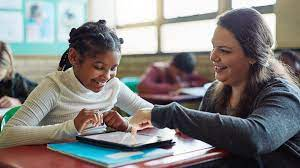
Some current issues nonprofit agencies have advocated for is urging the Pentagon to implement regulations allowing transgender people to serve in the military and school boards ending contracts with police departments that provide school resource officers.
The first step is understanding that there is always a need for change. Families will always need support, and students will always need advocates.
An advocate is someone who publicly supports or recommends a cause. In the early childhood sector, there are multiple organizations that you can actively participate in, depending on what sort of advocacy you are seeking.
Types of Advocacy
According to the Early Childhood Advocacy Toolkit (2009), advocacy in early childhood education is about building support among stakeholders, officials, key opinion leaders, elected officials. Types of advocacy include case advocacy, administrative advocacy, legislative advocacy, and media advocacy.
Case Advocacy
Case advocacy is when a person intervenes to address an individual child or family problem (Early Childhood Advocacy Toolkit, 2009). It can also be referred to as individual advocacy. Social workers may work independently or with school districts to address issues in the early childhood environment. Social workers, teachers, and counselors may be involved in cases with families.
Administrative Advocacy
Nonprofit agencies have a substantial role in administrative advocacy, which involves influencing government agencies' rules to implement laws. Administrative advocacy focuses on using two types of lobbying to gain support. Direct lobbying is used to communicate a view about specific legislation. Grassroots lobbying advocates urge the public to contact legislators with their views regarding legislation.
Legislative Advocacy
Through legislative advocacy, an advocate works with elected officials to inform them of the impact that policies and programs have on their home district. They can make recommendations that benefit their community (Early Childhood Advocacy Toolkit, 2009).
Media Advocacy
Media advocacy uses media to increase public awareness and influence debate about early childhood issues. Common stakeholders of media advocacy are employees, executive leaders, teachers, parents, and customers. They utilize digital resources, magazines, newspapers, radio, television, and podcasts to share their viewpoints and discuss issues in the community.

An Organization Worth Fighting With: YMCA of Augusta
It has long been known that the YMCA is a cause-driven organization focused on three key areas: youth development, healthy living, and social responsibility. The mission is that building strong communities can be achieved when the community invests in children, health, and their neighbors. The programs, services, and initiatives enable youth to realize their potential, offer families ways to have fun together, empower people to be healthier in spirit, mind, and body, welcome and embrace newcomers and help foster social responsibility (Reisig & Sanchez, 2017).

You may not be aware that they are partnered with a major organization called United Way. With United Way, the YMCA can offer multiple opportunities for children, adults, families, and the communities in which they reside at low prices for all (Reisig & Sanchez, 2017).
There are one YMCA headquarters in the Augusta area, and there are 10 YMCA locations around the CSRA that serve daily to support their communities.
With a 162-year legacy of service in the C.S.R.A, the nonprofit Family YMCA of Greater Augusta offers programs and services at more than 50 CSRA locations, including 10 program and wellness facilities and Camp Lakeside, a 100-acre camp located on Lake Thurmond.
The Family Y’s Prime Time program provides after-school care at 27 Richmond, McDuffie, Aiken, Jefferson, Barnwell, and Columbia County elementary schools and 13 summer campsites that focus on improving the quality of care for children.
Each year the YMCA works with United Way to raise money for the annual campaign. Community members have the opportunity to have funds deducted from their paychecks, and any donation amount is accepted. Each year the organization raises over 3 million dollars.
Then the YMCA gives away nearly $2 Million in scholarships for families who need after-school care, daycare, or want their children in sports but cannot afford it.
Another program advocated for children in the August area is to have quality beds. A Place to Dream Program was advocated for in 2017. More than 1,000 beds have been delivered to families in need.
During the COVID-19 shut down from March to August, we provided over 375,000 meals to children and adults through our Food Program. By the end of 2020, we will have provided more than 750,000 meals. Families received blessing boxes filled with non-perishable food items and juice each week. There were no stipulations for receiving a box. All they had to do was show up and tell the YMCA staff how many people were in their family.
The YMCA saw a growing need for families to receive food, so from September 2020 through February 2021, 1,254 YMCAs served food across more than 11,000 distribution sites.

In the CSRA, many families rely on free or reduced-price school meals during the day. But after school, almost 18 million children and teens lack access to healthy food. Thanks to the partnership with the Walmart Foundation, the YMCA can ensure children have access to nutritious meals during this critical out-of-school time.
In addition to the food provided, the YMCA also believes in the importance of active minds and bodies. Ys provide learning enrichment and physical activities at more than 2,500 out-of-school time meal programs.
If you are interested in volunteering and serving at your local YMCA, here is a list of available programs that you can get involved in.
A Place of Dreams Program
Food Program to include the Summer Meal Program and the After School.
Program
Volunteering on the YMCA Board
Becoming a Coach or Member
Leadership Growth for Teenagers and Youth
To get further information please follow the links below:
Please check out a ways to volunteer video created by the YMCA.
Ways to Advocate
At the YMCA, Early care and education are necessary services offered by the YMCA. Here are some current priorities for early care and education. The Y believes that building strong foundations during the early years helps prepare children for academic and lifelong success. Research indicates that for each dollar spent on quality early learning, there is a long-term savings of $13 based on increased tax revenue, reduced crime, education savings, and welfare savings(Advocating for Early Care and Education, n.d.).
One priority is supporting strong foundations by expanding funding for Head Start. Head start provides necessary foundation skills for young children a comprehensive set of services to families including education, nutrition, healthcare, and more to enhance child well-being (Advocating for Early Care and Education, n.d.).
Another priority is supporting affordable child care for working families by increasing funding for the Child Care and Development Block Grant (CCDBG). CCDBG supports economically disadvantaged families by increasing the availability, affordability, and quality of child care (Advocating for Early Care and Education, n.d.).
Take the time to get involved. Your time can make a major impact.

References:
About Us – Family YMCA of Greater Augusta. (2017). Thefamilyy.org. https://thefamilyy.org/about-us/
Advocating for Early Care and Education. (n.d.). Www.ymca.org. Retrieved July 27, 2021, from https://www.ymca.org/what-we-do/social-responsibility/advocate/early-education
Bolder Advocacy. (2020). Administrative Advocacy. Bolder Advocacy: A Program of Alliance for justice. https://bolderadvocacy.org/resource/administrative-advocacy/
Early Childhood Advocacy Toolkit. (2009). https://startearly.org/app/uploads/pdf/EarlyChildhoodAdvocacyToolkit.pdf
Reisig, & Sanchez. (2017). United Way Fights to ensure that all Children are Ready for Success | United Way Worldwide. Www.unitedway.org. https://www.unitedway.org/the-latest/press/united-way-fights-to-ensure-that-all-children-are-ready-for-success#


Comments